A Conversation with Oscar Sunderland, OCD Gallery
Words by: Joshua Matvichuk
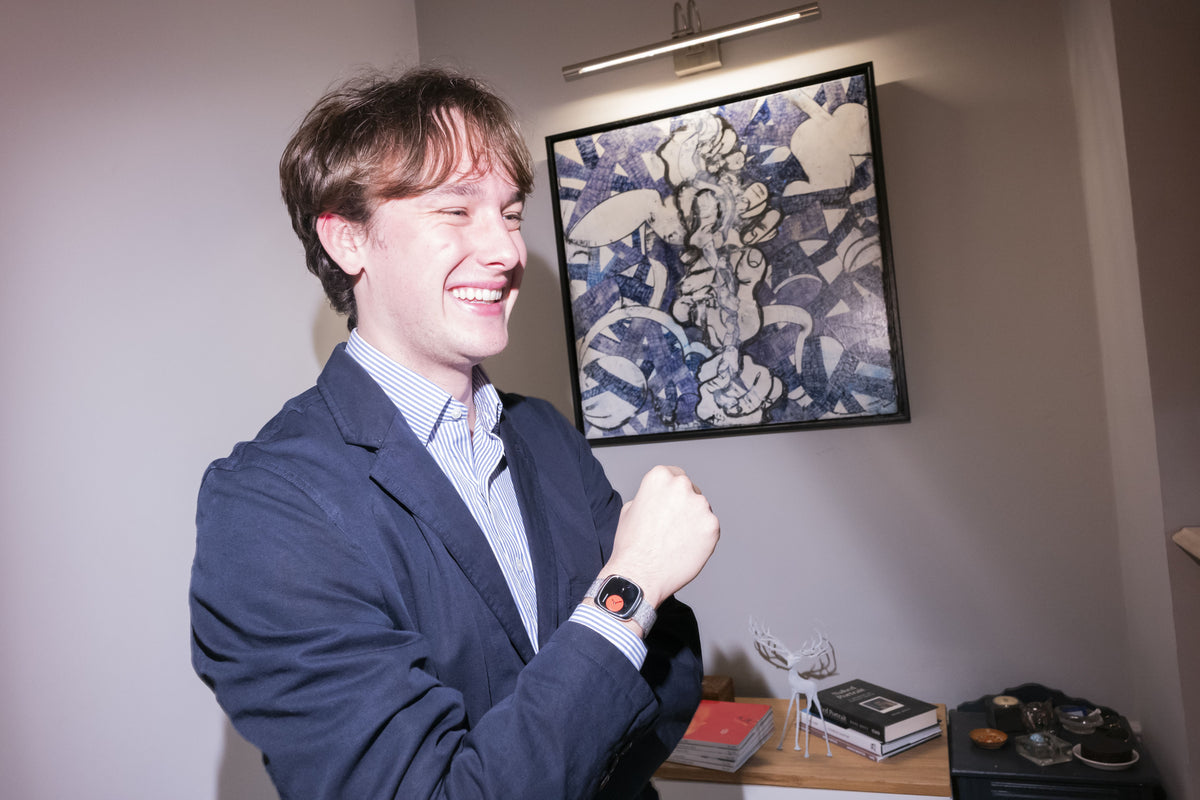
In a world where taste often feels manufactured, Oscar Sunderland’s feels instinctive a gut-level radar for objects that hum with life. From the carefully cluttered calm of OCD Gallery co founded with his partner in the art world Chloe Stewart, he’s built a space that blurs the line between collector and curator, chaos and control. Each piece, whether a towering canvas painted by friend and client Leopoldo Gout or a sketch by a friend, carries its own rhythm a dialogue between obsession and restraint.We spoke with Oscar about the rituals of collecting, the parallels between art and watchmaking, and the quiet satisfaction of living with things that endure. After a quick tour around his apartment and some of his favourite objects, we headed to the Park restaurant and met up with our designer Emmanuel Gueit for some light refreshment. Over the course of a couple of hours Emmanuel and Oscar had a passionate conversation about all things design. We’ve condensed their meeting below.
OCD Gallery has this beautiful tension between chaos and control how much of that reflects your own relationship with collecting?
That tension is the relationship. I’m drawn to work that feels alive, slightly unruly, but I only really understand it once it’s placed within a structure. The gallery works the same way, moments of density held together by an underlying logic. I’m not interested in frozen displays. I want things to move, but with intention.


The name OCD suggests a kind of obsessive eye do you see that same obsessive streak in design, whether it’s in art, interiors, or watchmaking?
Definitely, though obsession is often misunderstood. For me, it’s less about control and more about attentiveness. In art, it’s visible in the way an artist returns to the same question repeatedly. In interiors or watchmaking, it’s about refinement, the tiny decisions that might go unnoticed individually but accumulate into something coherent. Obsession, at its best, is just sustained care.
You’ve curated spaces that feel deeply personal, not sterile. How do you balance precision with imperfection the same way a watchmaker might?
I try to be precise about decisions, not outcomes. I’ll think carefully about what belongs in a space and why, but once it’s there, I let it live. I like signs of a creative process: wear, movement, and slight disorder. A watch isn’t meant to sit in a safe; it’s meant to be worn. I feel the same about art. Perfection is static. Use is human.


Dennison built its reputation on timeless design. Do you think art should strive for the same kind of longevity, or is impermanence part of the appeal?
The best art holds both. Longevity doesn’t mean stasis; it means relevance over time. Some works endure materially, others conceptually. Impermanence can be powerful, but I’m personally drawn to things that deepen with age, that reward sustained attention. I’m wary of work that only functions in the present tense.
You’ve said before that you buy pieces you want to live with, not just look at. What makes something worth living With?
It has to change you subtly. Something you notice differently at different times of day, or after a year, or after something significant happens in your life. If a work keeps giving without demanding constant explanation, that’s when it earns its place. Comfort isn’t the goal; companionship is.

There’s a ritual to collecting finding, researching, waiting. What’s your version of that ritual?
Time and proximity. I like to sit with things, revisit studios, live with images, talk to the artist, sometimes do nothing at all. If the pull remains after the initial excitement fades, that’s usually a sign. I don’t rush decisions; anticipation is part of the pleasure.
Do you think a watch collection and an art collection tell similar stories about someone’s taste or are they completely different languages?
They’re different dialects of the same language. Both reveal how someone relates to time, to detail, to restraint. A watch collection can show discipline or nostalgia; an art collection might show risk or curiosity. Together, they give a fuller picture, not just of taste, but of temperament.

Time plays such a big role in both worlds provenance, aging, patina. How do you think about the passing of time in your own work and life?
I’m increasingly comfortable with slowness. I don’t feel the need to rush outcomes anymore. I’m more interested in building things that can absorb time rather than fight it: relationships, collections, spaces. Patina, in all forms, feels earned.
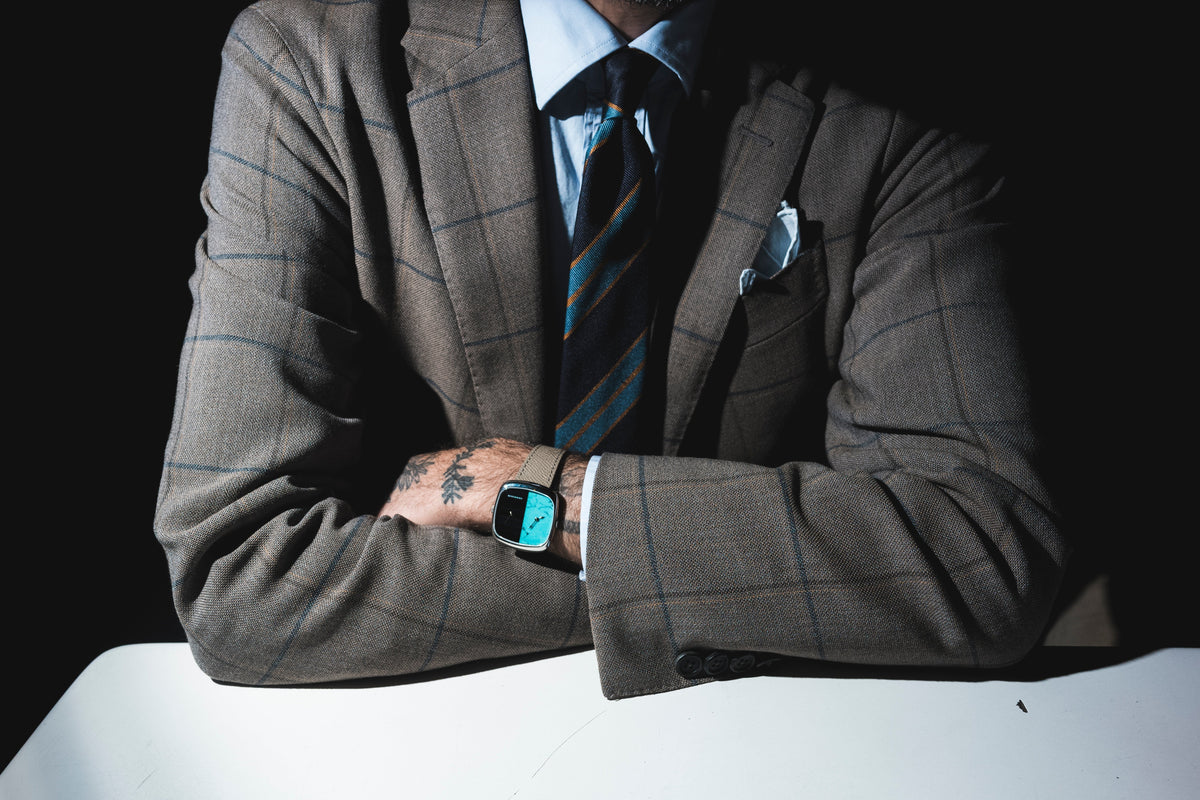
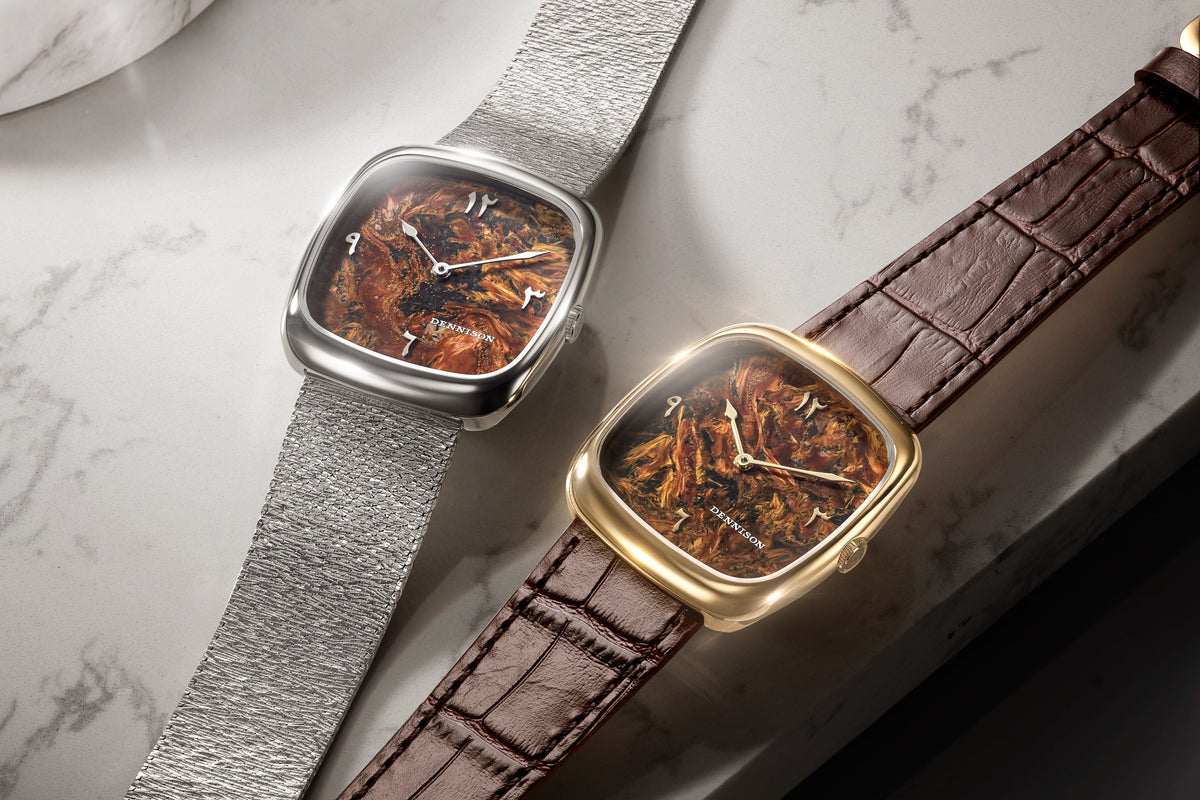
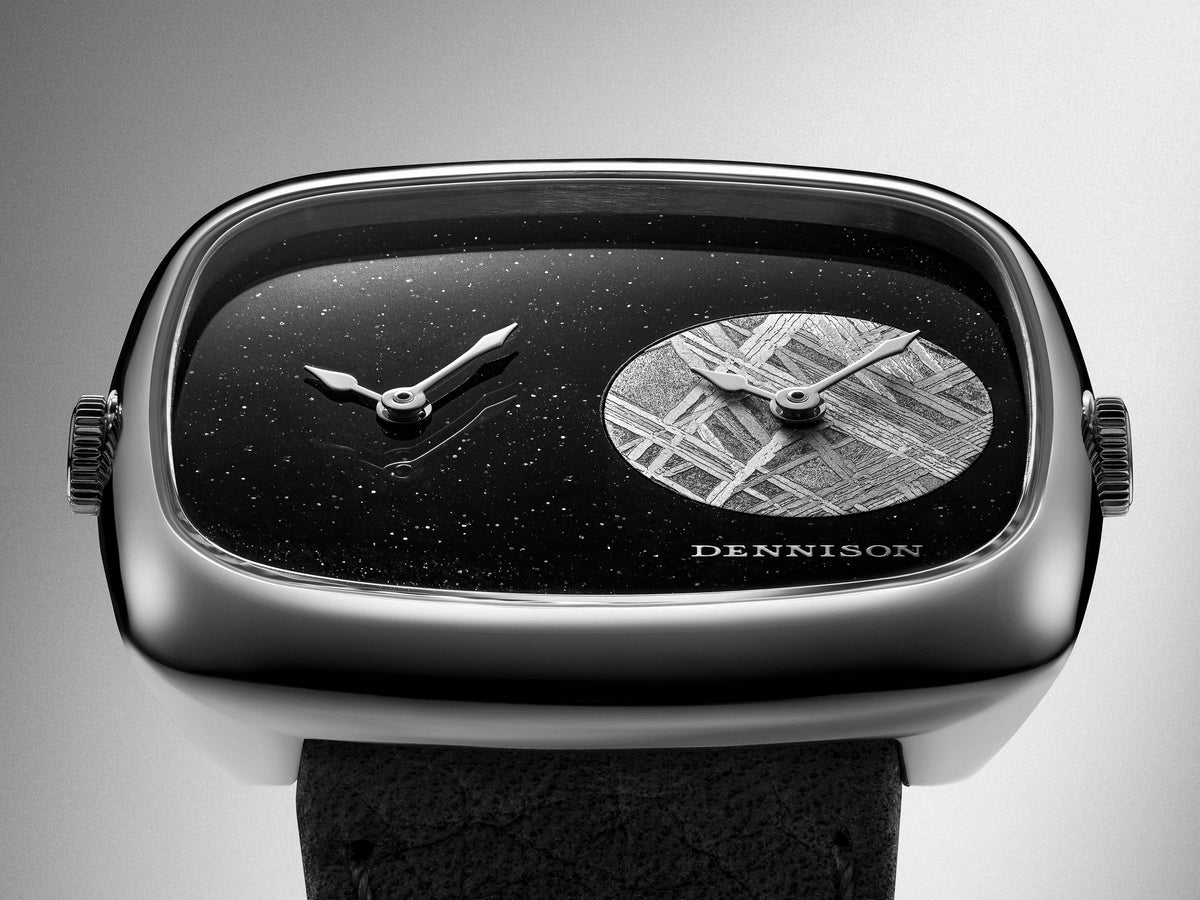
As a gallerist what stood out to you when approaching and handling Dennisons watches for the first time?
What stood out immediately was the design's confidence. The watches are built with discipline, understated in appearance, yet assured in their performance. There’s a sleekness to them, punctuated by subtle moments of vibrancy across the designs, all anchored by thoughtful, practical construction. The result feels modern without being fleeting. For me, it's a timeless piece that draws attention through clarity rather than excess, and invites conversation rather than demands it.
Finally, what’s the one piece, watch, or object you’d save if you had to start over from zero?
It would have to be a miniature painting by the brilliant artist Leopoldo Goút that really signifies the start of my life in the art world.

You can find Oscar and his impressive roster of artists at
https://oscarchloedirectory.com/
@oscarchloedirectory