The Shape Makers of the Opal World
Words & Photos by: Cedar Barnes
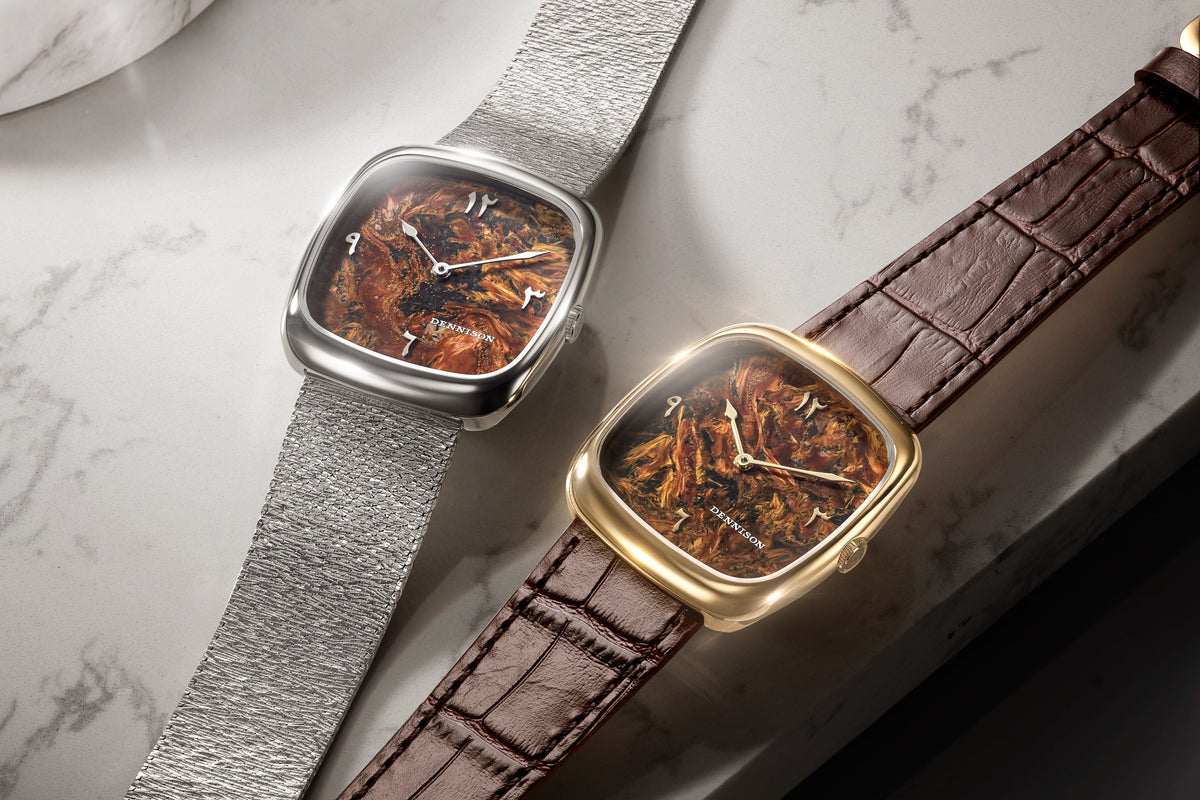
Nature spent over 100 million years creating the opal. Emil Weis Opals, the world’s oldest opal cutting factory has been mastering the cutting of these precious stones for over 120 years. Ran by four generations of dedicated opal cutters, the craftsmen living and working at the historic gem cutting village Idar-Oberstein, Germany, sit at the same stations meticulously shaping these stones into beautiful forms just as their great grandparents had. The stones shaped at Emil Weis Opals are used by the world’s top jewelry and design houses for their jewelry. This dedication to craft and history is why Dennison asked Emil Weis Opals to collaborate together in producing these incredible opal stone dials for Dennison’s Special Order pieces.

The opal represents an act of patience, formed over millions of years from silica-rich waters that once flowed beneath ancient and bygone seas. The stones capture colour unlike any other gem found on earth. Four generations of knowledge inform the selection, cutting technique, polishing procedure, and finishing that goes into every piece of opal. Each stone possesses its own unique arrangement of colour, pattern and light, formed by geological processes that cannot be replicated or repeated, making no two opals alike. The cutter's role is not to create beauty, but to uncover it. Understanding the stone, following its structure, and patiently revealing the flashes of fire and ice concealed within is a craft that demands not only technical precision, but decades of experience and an instinct that can only be handed down through generations.

This philosophy mirrors Dennison's own approach to watchmaking and design. The dial is the face of a watch, the surface with which the wearer forms the deepest connection. By pairing these extraordinary Australian opals with the century-old expertise found at Emil Weis Opals, each watch becomes more than a timepiece. It is the culmination of two histories: one written by nature over millions of years, the other by generations of master craftsmen dedicated to honoring it.

The journey from rough opal to finished watch dial begins long before a machine is switched on. Every stone is first selected by eye and by experience. Its layers, colour and natural structure is carefully examined to determine whether it possesses the depth, stability and character required for a watch dial. Unlike other gemstones, an opal's brilliance depends entirely on its orientation. Rotate the rough by only a few degrees and the play of colour can change completely. The first decision, therefore, is not how to cut the stone, but how to unlock the greatest expression of the millions of microscopic silica spheres that nature arranged over 100 million years ago.

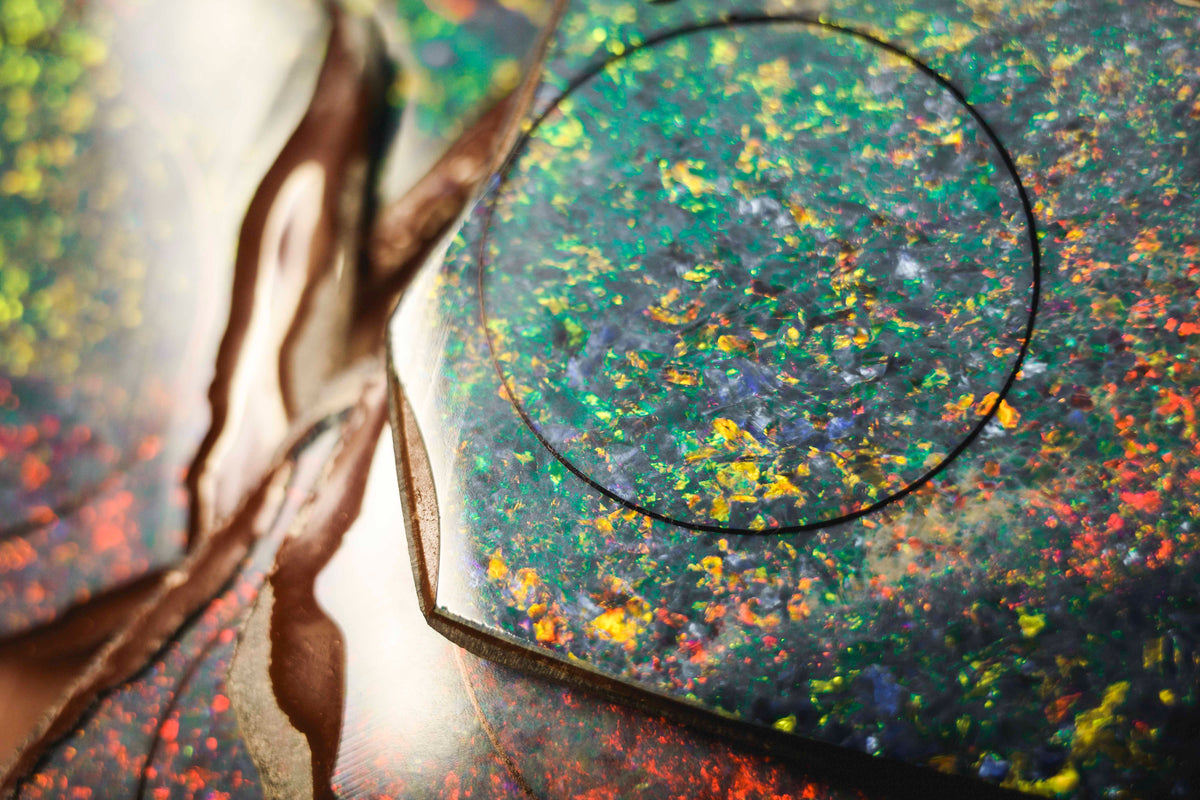
Once the orientation has been determined, the process becomes one of extraordinary patience. The rough opal is gradually ground, lapped and refined, removing material a fraction at a time until only the finest layer of colour remains. Over many hours, the stone is reduced to an astonishing thickness of just 0.4 millimetres; thin enough to become the face of the ALD watch, yet strong enough to endure decades of wear. Every pass across the lap removes material forever. At this stage there is no opportunity for correction and a single misjudgment can fracture the stone or erase the very colour that made it exceptional.

Only after the desired thickness has been achieved, the final shaping begins. Each dial is individually cut to the exact dimensions required for the Dennison ALD case before being meticulously polished to reveal its full depth and luminosity. The finished surface is not simply smooth; it possesses a remarkable sense of depth, housing trapped water molecules and silicate, allowing light to travel into the gemstone before returning in flashes of blue, green, red and gold that seem suspended beneath the surface.
Unlike lacquer, enamel or painted dials, an opal is alive with movement. Every change in light reveals a different composition of colour. What appears deep ocean blue indoors may ignite with emerald green or crimson fire beneath the sun. Two dials cut from neighbouring sections of the same rough stone will display entirely different personalities. It is this unpredictability that makes opal one of the most captivating and demanding materials a craftsman can work with.

For the master cutters at Emil Weis Opals, the objective is never to impose a design upon the gemstone. Their role is to understand what nature has already created and carefully reveal it. More than a century of accumulated knowledge informs every decision: where the colour bar lies, how the stone should be supported during grinding, how much material can safely be removed, and precisely when the polishing is complete. These are skills that cannot be hurried or automated, but are learned over decades and passed from one generation to the next, preserving techniques that have defined the workshop in Idar-Oberstein for over 121 years.

The remarkable thinness of each dial also reflects an exceptional feat of engineering. A gemstone formed over geological time must ultimately meet the exacting tolerances demanded by modern watchmaking. The dial must sit perfectly within the case, accommodate the movement beneath it, accept the hands, and perform with the same precision expected of any finely made timepiece. Achieving this balance between natural material and mechanical accuracy is what makes gemstone dial making such a rare discipline.

For collectors, this process transforms each watch into something far beyond a limited edition. Rather than selecting from a catalogue of identical dials, Dennison clients have the opportunity to choose what can be shown on the watches they wear and collect. Each natural stone face has its own unique arrangement of colour, pattern and movement, and this is especially so with opal. Some may be drawn to vivid electric blues that recall deep oceans; others to fiery reds and oranges, or delicate washes of green that seem to shift with every glance. They are especially collectable items because no two stones can ever be replicated because no two formed under exactly the same geological conditions.


This ability to choose the character of the stone gives every Dennison Opal Dial a deeply personal quality. It is not simply a matter of selecting a colour, but of accepting a natural work of art that speaks to the individual owner. The resulting watch becomes a singular object, a collaboration between the forces of nature, the judgement of master craftsmen, and the vision of its wearer.
In an era where luxury is often defined by scarcity, the Dennison Opal Dial represents something even rarer: true individuality. The stone cannot be manufactured, its colours cannot be copied, and its patterns can never be repeated. Every dial is a unique geological record, preserved over millions of years and entrusted to artisans whose role is simply to reveal its beauty.

Nature spent over 100 million years creating the opal. Emil Weis Opals contributes generations of expertise to unlocking its brilliance. Dennison brings these two histories together, creating a timepiece in which ancient geology, traditional craftsmanship and contemporary watchmaking exist in perfect harmony. The result is not simply a watch with an opal dial, but an object whose story began millions of years before time itself was ever measured.
If you would like more information to acquiring a Dennison Special Order watch then please reach out to atelier@dennisonwatch.com